


The smell of freshly baked ciabatta bread wafts through the kitchen, making your mouth water and your stomach growl in anticipation. With its crispy crust and soft, airy interior, this Italian delight is not just bread; it’s a culinary experience that brings warmth and happiness to every meal.
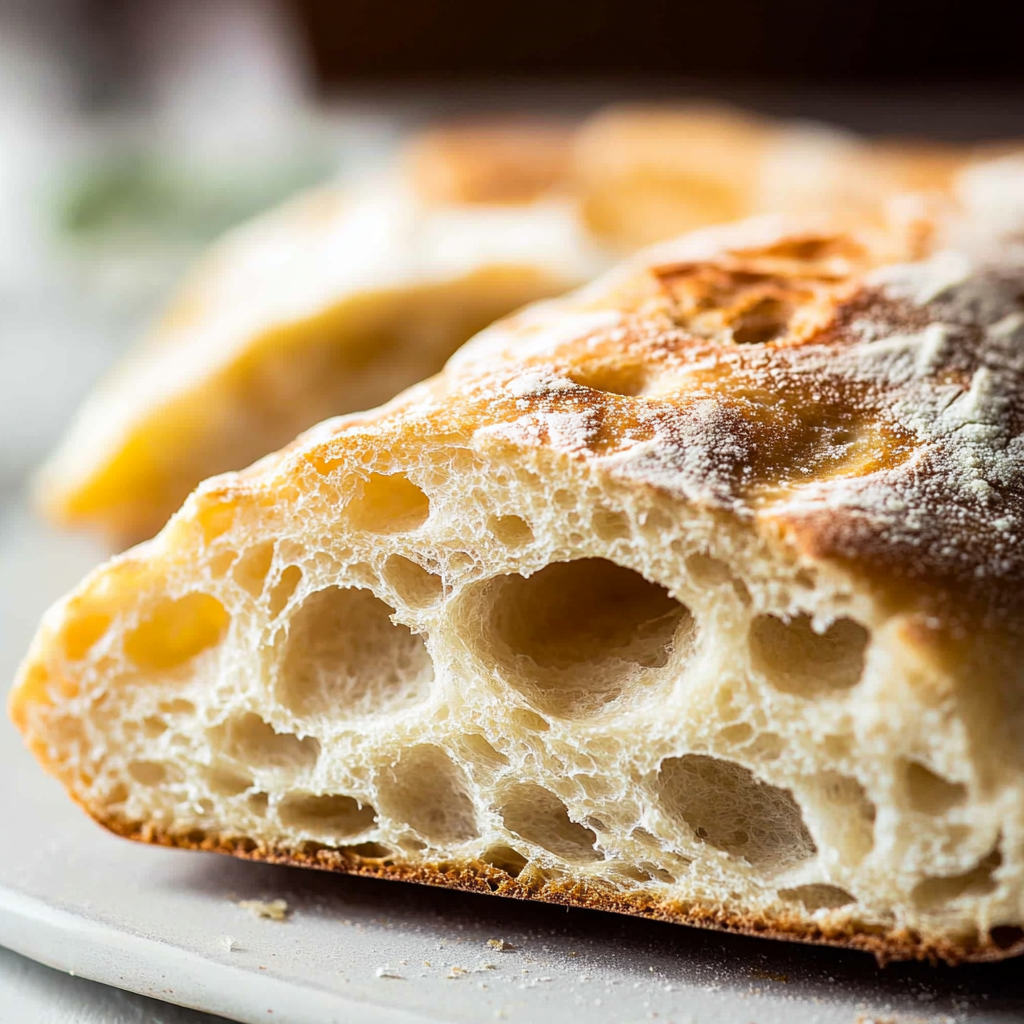
Picture yourself tearing into a loaf of ciabatta, the sound of its crust crackling echoing in the air. Whether slathered in olive oil or turned into a gourmet sandwich, each bite is a flavor explosion that transports you straight to an Italian café. Let me take you on a journey to create this iconic bread, where every step is filled with joy, laughter, and perhaps a little flour on your nose.
Why You'll Love This Recipe
- Making ciabatta bread is surprisingly easy and requires minimal ingredients
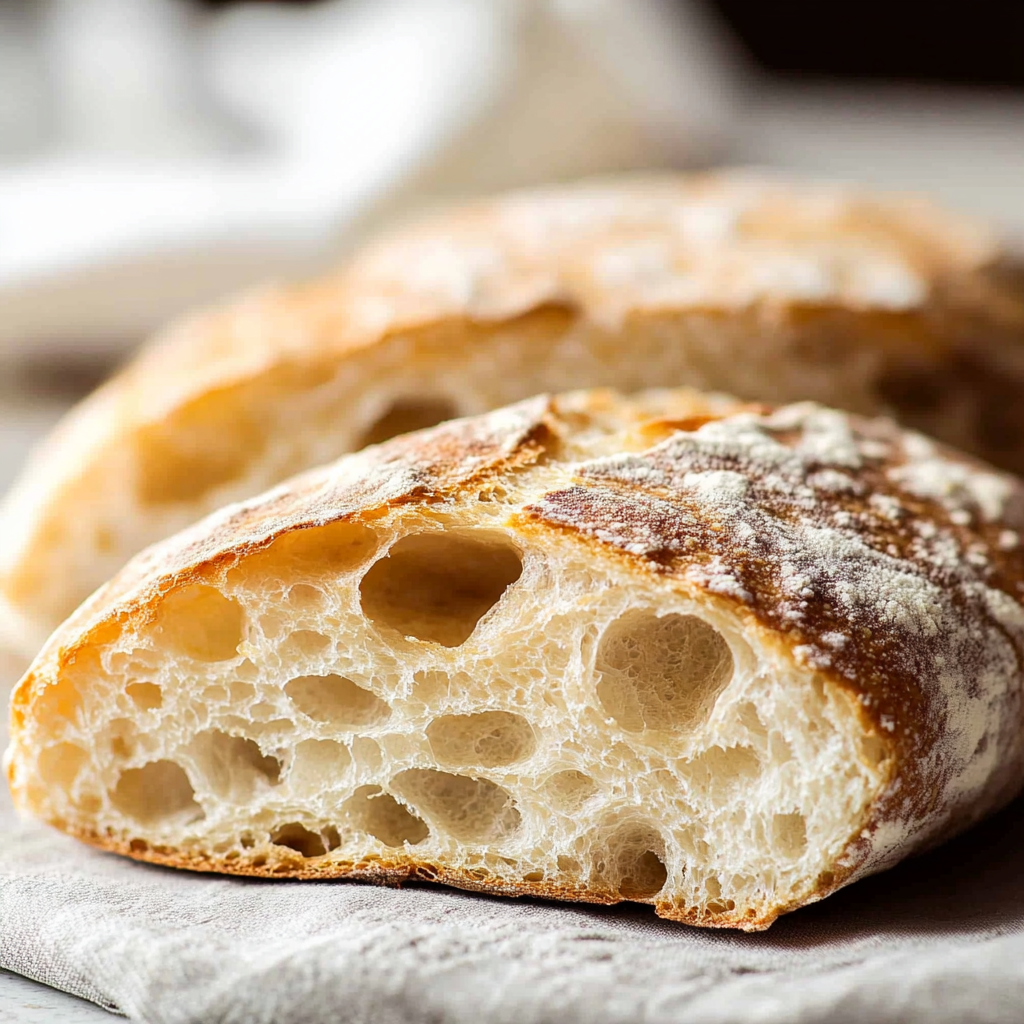
- The crusty exterior gives way to a soft, chewy inside that’s perfect for sandwiches or as a side
- You can easily add herbs or spices to customize it to your taste
- Best of all, it fills your home with an irresistible aroma!
I remember the first time I baked ciabatta; my friends were amazed at how professional it looked—and tasted! They couldn’t believe I had made it from scratch.
Essential Ingredients
Here’s what you’ll need to make this delicious dish:
-
All-Purpose Flour: Use high-quality flour for better structure and chewiness in your bread.
-
Water: Room temperature water helps activate the yeast effectively.
-
Yeast: Use active dry yeast for consistent rising; fresh yeast works wonders too.
-
Salt: Essential for flavor; don’t skimp on this ingredient!
-
Olive Oil: Adds richness and enhances the texture of the dough.
The full ingredients list, including measurements, is provided in the recipe card directly below.
Let’s Make it Together
Mixing the Dough: In a large mixing bowl, combine flour and salt. In another bowl, mix water and yeast until bubbly. Pour the yeast mixture into the flour blend and stir until combined.
Kneading Time: Transfer the dough onto a floured surface. Knead gently for about 10 minutes until smooth and elastic. Don’t worry if it’s sticky; that’s part of the charm!
First Rise: Place the kneaded dough in a greased bowl. Cover it with a damp cloth and let it rise in a warm area for about 1 hour or until doubled in size.
Shaping Ciabatta: After rising, gently deflate the dough on a floured surface. Divide it into two pieces and shape each into a rough rectangle without overworking it—remember, we want that airy interior!
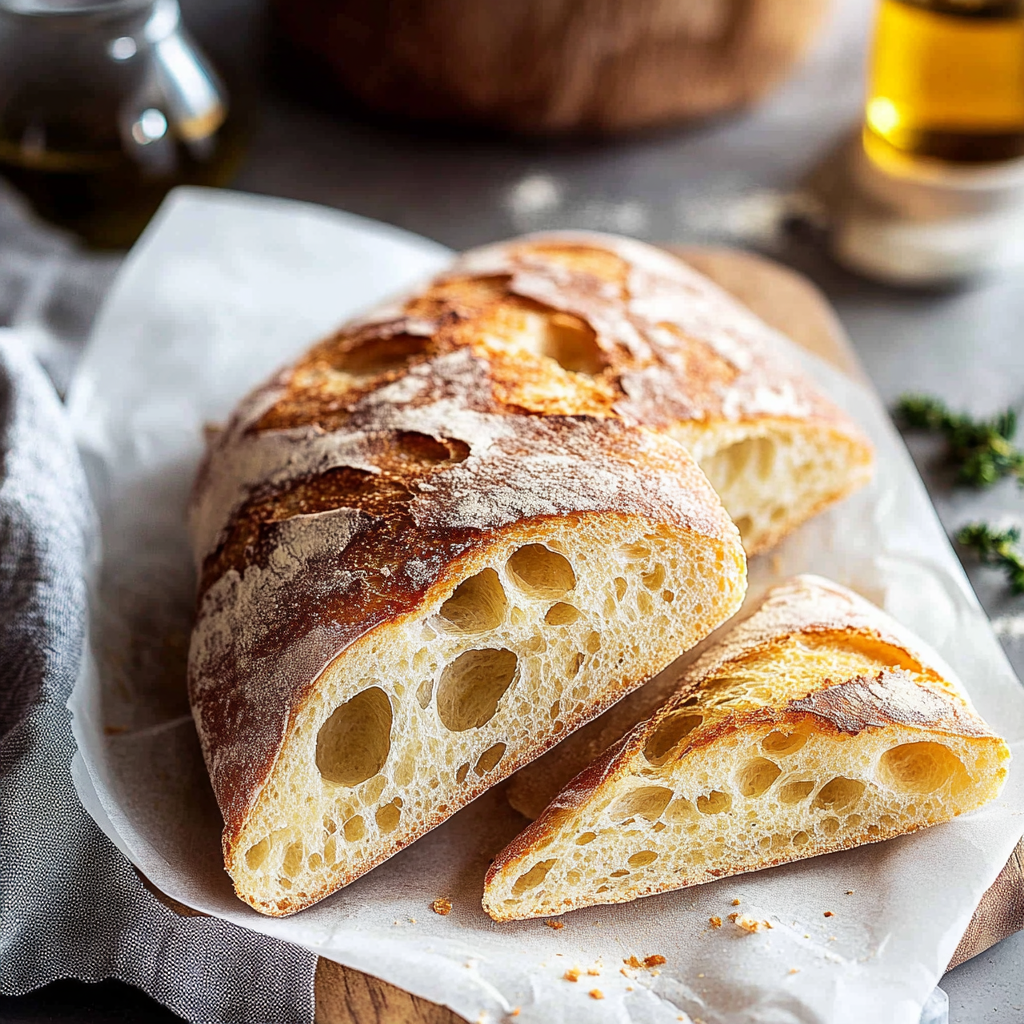
Baking It Up!: Preheat your oven to 450°F (230°C). Place shaped loaves on a baking sheet lined with parchment paper. Bake for 20-25 minutes until golden brown and sounds hollow when tapped.
Enjoy your freshly baked ciabatta bread warm from the oven!
You Must Know
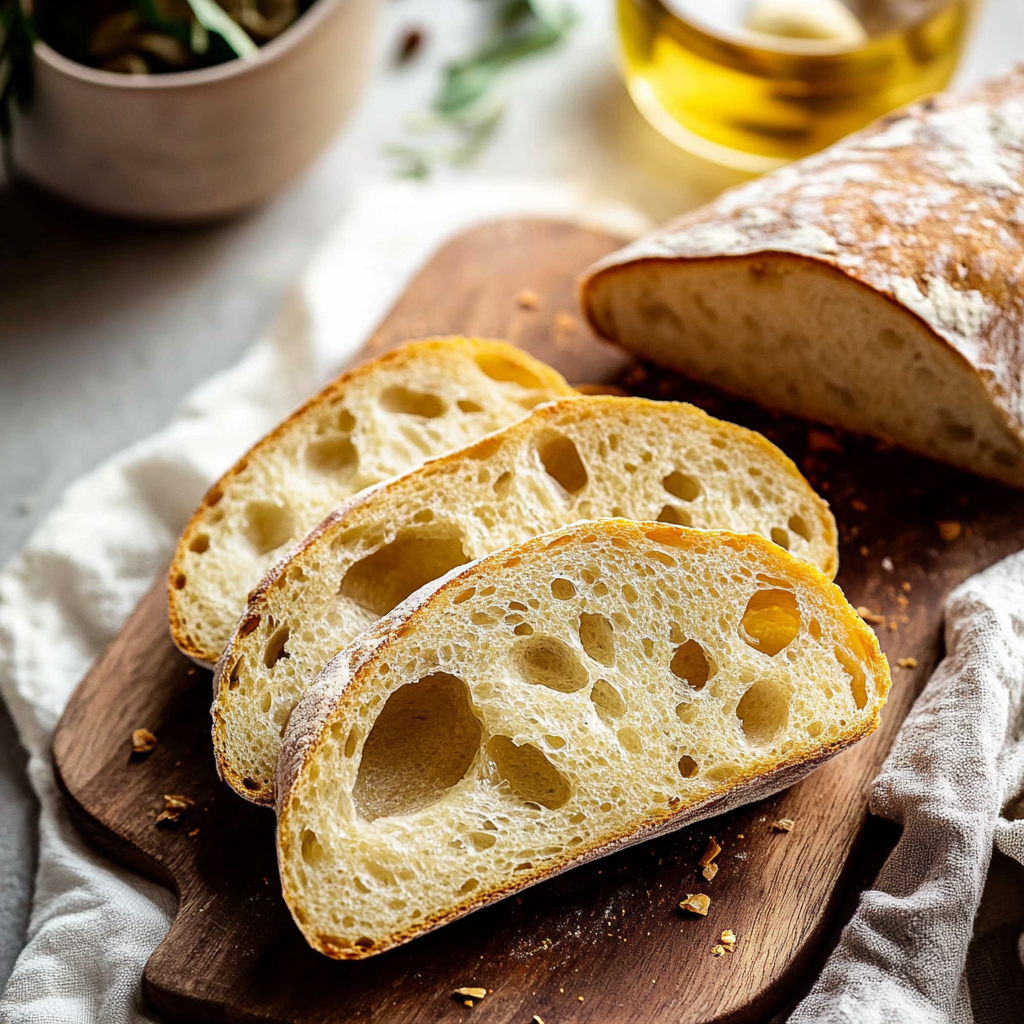
- Ciabatta bread is a delightful canvas for sandwiches or dipping in olive oil
- Its crusty exterior and airy interior provide a satisfying crunch and chew
- Mastering this recipe transforms your kitchen into an Italian bakery, filling it with warm, yeasty aromas that invite everyone in
Perfecting the Cooking Process
Start by mixing the dough and letting it rise overnight. Shape the bread gently to preserve air pockets, then bake at 450°F (232°C) for that golden crust.
Add Your Touch
Feel free to experiment with herbs like rosemary or add olives for a Mediterranean twist. Cheese could also be folded in for extra flavor.
Storing & Reheating
Store ciabatta bread in a paper bag at room temperature for up to two days. Reheat in the oven for crispness without drying out.
Chef's Helpful Tips
- Ensure your water is lukewarm when activating yeast, as too hot can kill it
- Kneading should be gentle, allowing air to form bubbles for better texture
- Always let the dough rest adequately to enhance its flavor and structure
Sometimes, friends have likened my homemade ciabatta to finding treasure; they can’t believe I actually made it! Their joy makes every sticky finger worth it.
FAQ
What flour is best for ciabatta bread?
Use high-protein bread flour for optimal gluten development and texture.
How do I know when my ciabatta is done baking?
The bread will sound hollow when tapped on the bottom and should be golden brown.
Can I freeze ciabatta bread?
Yes, wrap it tightly in plastic wrap and foil before freezing to maintain freshness.
Ciabatta Bread
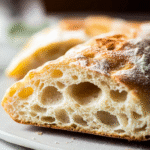
Indulge in the aromatic delight of homemade ciabatta bread, featuring a crispy crust and a soft, airy interior. This Italian staple is perfect for sandwiches or as a flavorful side dish, transforming your kitchen into a warm and inviting space. With just a few simple ingredients and straightforward steps, you can create this artisanal bread that will impress family and friends alike.
- Prep Time: 15 minutes
- Cook Time: 25 minutes
- Total Time: 40 minutes
- Yield: About 12 servings 1x
- Category: Bread
- Method: Baking
- Cuisine: Italian
Ingredients
- 4 cups all-purpose flour (500g)
- 1 ½ cups room temperature water (360ml)
- 2 tsp active dry yeast (7g)
- 2 tsp salt (10g)
- 2 tbsp olive oil (30ml)
Instructions
- In a large bowl, mix flour and salt together.
- In another bowl, combine water and yeast until bubbly. Pour into the flour mixture and stir until combined.
- Transfer the dough to a floured surface and knead gently for about 10 minutes until smooth.
- Place the dough in a greased bowl, cover with a damp cloth, and let rise in a warm area for about 1 hour or until doubled in size.
- Gently deflate the dough on a floured surface, divide into two pieces, and shape each into a rough rectangle.
- Preheat your oven to 450°F (232°C). Place loaves on parchment-lined baking sheets and bake for 20-25 minutes until golden brown.
Nutrition
- Serving Size: 1 slice
- Calories: 130
- Sugar: 0g
- Sodium: 160mg
- Fat: 3g
- Saturated Fat: 0.5g
- Unsaturated Fat: 2g
- Trans Fat: 0g
- Carbohydrates: 24g
- Fiber: 1g
- Protein: 4g
- Cholesterol: 0mg

